
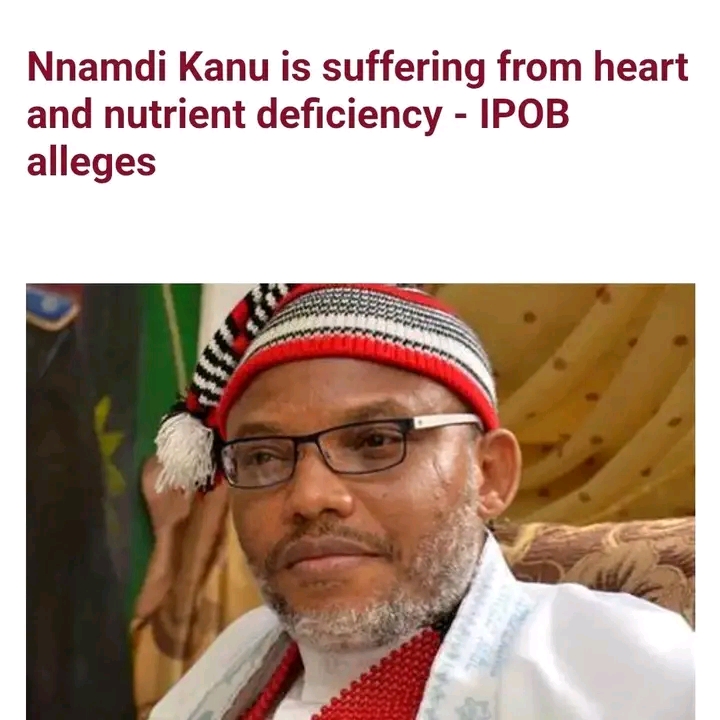
The Indigenous People of Biafra (IPOB), a secessionist group in Nigeria, has alleged that their leader, Nnamdi Kanu, is suffering from nutrient deficiency and heart ailments while in the custody of the Department of State Services (DSS). According to a statement released by the group’s spokesperson, Emma Powerful, on March 14th, Kanu’s health is deteriorating as a result of poor or lack of medical attention and feeding.
The group has challenged the DSS to prove them wrong by allowing Kanu’s physician to attend to him. They also accused the DSS of denying Kanu access to his doctor, his praying shawl, and a change of clothes. The statement further called for Kanu’s unconditional release or for him to be taken to specialists for proper medical examination and treatment.
Powerful also refuted claims that IPOB’s lawyer, Ifeanyi Ejiofor, is working against Kanu, stating that such claims were baseless and unfounded. He pointed out that Ejiofor had been under serious attacks from the DSS and the Nigerian Army.
The allegations made by IPOB are likely to further heighten tensions between the secessionist group and the Nigerian government. It remains to be seen how the DSS will respond to the group’s demands for Kanu’s release or medical attention.
Nnamdi Kanu was arrested in June 2021 and has been in detention since then. He is facing charges of treasonable felony, terrorism, and illegal possession of firearms, among others. Kanu, who is the leader of IPOB, is known for advocating for the secession of the southeast region of Nigeria to form the independent state of Biafra.
The detention and prosecution of Kanu have been a major point of contention between IPOB and the Nigerian government. The group has been calling for Kanu’s release, and his case has sparked protests and demonstrations across the southeast region of Nigeria.
The allegations of Kanu’s poor health are likely to further fuel tensions and could potentially lead to further unrest in the region. The Nigerian government has yet to respond to IPOB’s demands for Kanu’s release or medical attention.
The situation in Nigeria remains volatile, with a number of security challenges, including insurgent groups, ethnic and religious tensions, and criminal activities. The government has been struggling to address these challenges and maintain stability in the country.
The international community has called for restraint and dialogue to resolve the crisis in Nigeria. The United Nations, the African Union, and other international bodies have expressed concern over the situation and called for a peaceful resolution to the conflict. However, it remains to be seen how the Nigerian government will respond to these calls and whether they will engage in meaningful dialogue with IPOB and other stakeholders.


