
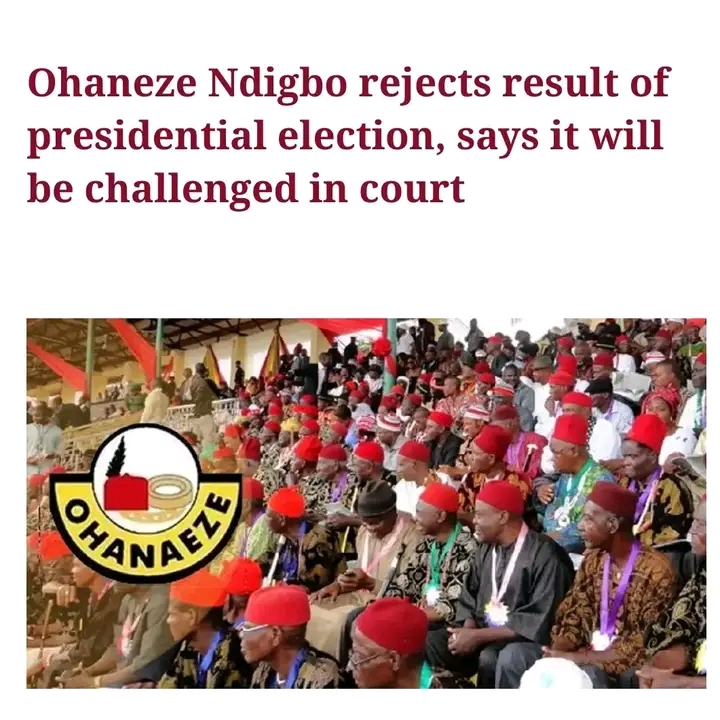
The Igbo socio-cultural group, Ohanaeze Ndigbo Worldwide, has rejected the results of the Nigerian Presidential election held on February 25, 2023, citing “monumental irregularities” and a lack of adherence to INEC guidelines during the election process. Damian Okeke-Ogene, the group’s National Vice President, has called for calm among Nigerians, stating that the result may not be final and that the worst election conducted by INEC is now behind them.
Okeke-Ogene has criticized the INEC chairman, Prof. Mahmood Yakubu, for failing to transmit votes from polling devices to INEC’s server, despite promising to do so. The group also claims that President Muhammadu Buhari had already declared Bola Tinubu as the next president during one of his campaigns, suggesting that the election was rigged beforehand.
This rejection highlights the widespread mistrust and dissatisfaction among Nigerians over the electoral process, which has been plagued by voter intimidation, vote buying, ballot box snatching, and violence in the past. To ensure the acceptance and legitimacy of the outcome, the Nigerian government and INEC must take proactive measures to address these challenges and build trust in the electoral process. This includes funding INEC adequately, deploying technology and security measures to prevent fraud, and involving all stakeholders in the process.
The rejection of the presidential election results by Ohanaeze Ndigbo Worldwide emphasizes the urgent need for reform of the electoral process in Nigeria. The government, INEC, and other stakeholders must work together to address these challenges and ensure that future elections are credible, transparent, and accepted by all Nigeria
The media has a critical role to play in promoting transparency and accountability during the electoral process. Journalists must be allowed to operate freely and without fear of reprisals, and the government must provide them with the necessary support and protection to carry out their work.
In conclusion, the rejection of the Nigerian Presidential election results by Ohanaeze Ndigbo Worldwide highlights the need for urgent reform of the electoral process in Nigeria. The government, INEC, civil society organizations, and the media must work together to address the challenges and build trust in the electoral system. With these measures in place, Nigerians can be assured of a free, fair, and credible electoral process that reflects the will of the people.


