
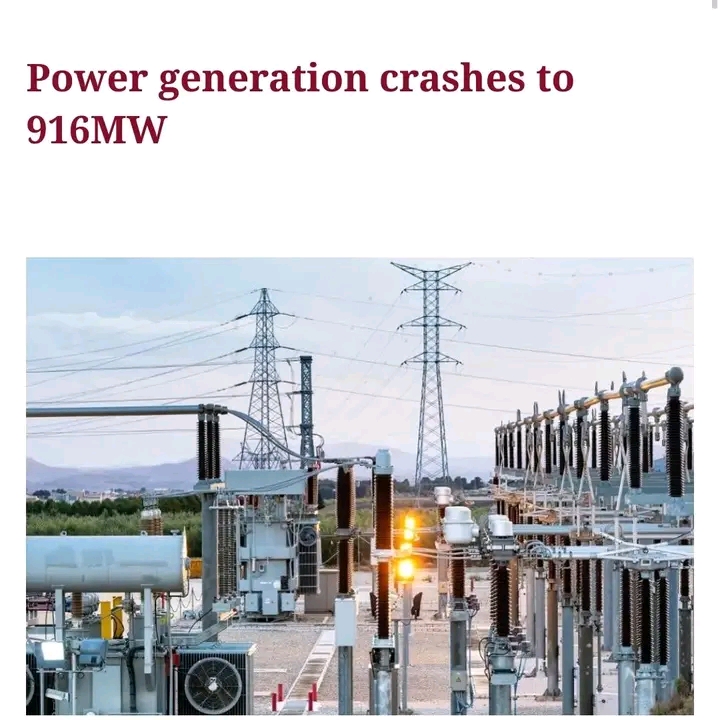
On Sunday, January 15th at 2pm, Nigeria experienced a significant decline in its electricity generation, with only 916MW being produced by two out of 24 power plants in operation.
This decline came after the 3,787.60MW that 17 power plants produced at 1pm the same day. The Managing Director of the Association of Power Generation Companies (APGC), Dr. Joy Ogaji, attributed this dip to a grid disturbance caused by inadequate payment. She also revealed that the Nigerian Bulk Electricity Trading Company (NBET) owes the GenCos over N1 trillion in debt. This highlights the ongoing challenges with payment and debt that have plagued Nigeria’s energy sector for a long time. These issues can lead to a lack of investment in the sector, power outages and a decline in the reliability of the power supply. It is crucial for the Nigerian government and relevant stakeholders to address these problems in order to improve the balance and reliability of the country’s power supply.
Furthermore, the high level of debt owed to the GenCos can also negatively impact the long-term financial stability of the sector. It is important for the Nigerian government and relevant stakeholders to take immediate action in addressing this issue, such as finding ways to improve payment processes, and addressing the root cause of the debt crisis.
In addition to addressing the debt and payment issues, there is also a need to invest in upgrading and modernizing the power infrastructure in Nigeria. This can include investing in renewable energy sources, such as solar and wind power, to diversify the energy mix and increase the country’s energy security.
Overall, the recent dip in Nigeria’s electricity generation highlights the urgent need for the government and relevant stakeholders to take action in addressing the ongoing challenges in the energy sector. By addressing the debt and payment issues, investing in upgrading and modernizing the power infrastructure, and diversifying the energy mix, the country can improve the reliability and stability of its power supply for the benefit of its citizens.


